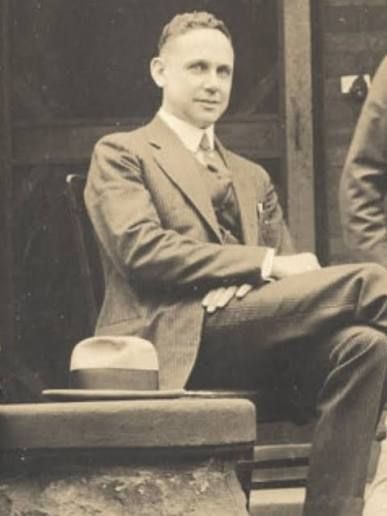
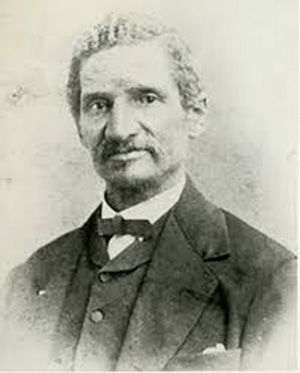
Dr. Ossian Sweet: The Detroit Physician Who Defended His Home and Built Black Medical Institutions
Most people know Dr. Ossian Sweet because of the house on Garland Street and the historic trial that followed. But when we remember him only through that case, we leave out an important part of his legacy.
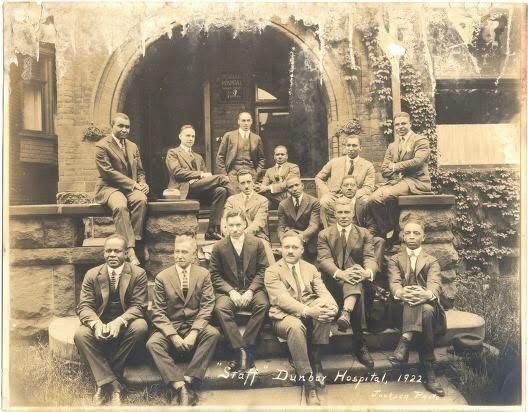
Dr. Sweet was a physician who cared for poor Black families in Detroit’s Black Bottom. He later helped create Black-controlled hospitals, including a hospital that provided maternity care to Detroit families.
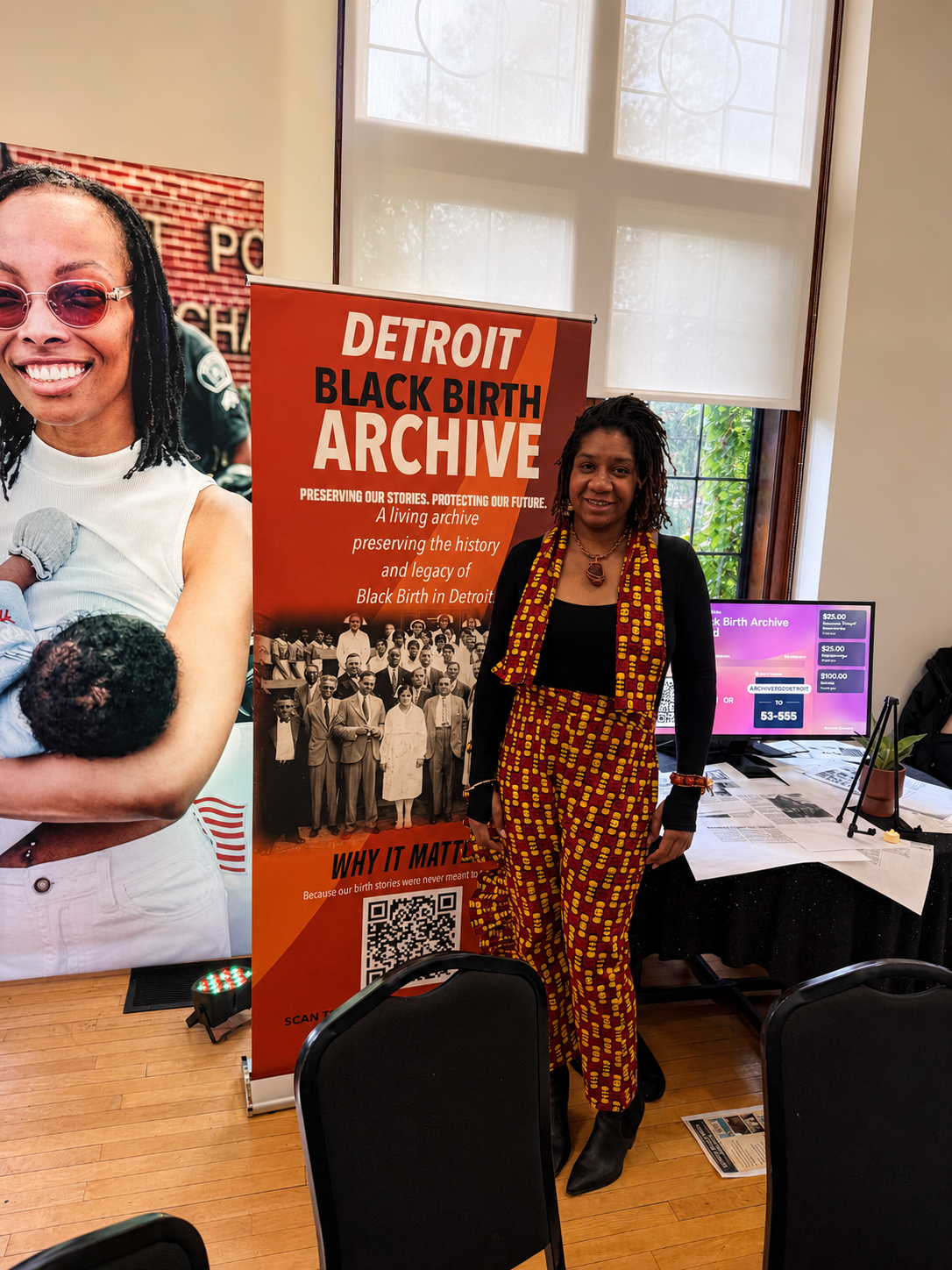
That is why his story belongs in the Detroit Black Birth Archive.
Detroit Black Birth Archive Presents: Reading Detroit 1925
In this video, I introduce Dr. Sweet’s story, share my private visit to the historic Sweet House with my doula sister Tawanda, and talk about meeting author and preservationist Daniel Baxter.
From Florida to Detroit
Ossian Sweet, whose first name is pronounced “Ocean,” was born on October 30, 1895, in Florida and raised in Bartow.
He grew up surrounded by the realities of Jim Crow and racial violence. The lynching of 16-year-old Fred Rochelle became part of the racial terror that shaped his childhood. Years later, Dr. Sweet would draw on that history while testifying about the fear he experienced inside his Detroit home.
At 13 years old, he left Florida to continue his education at Wilberforce University in Ohio. When the scholarship money he expected was not available, he worked jobs around campus to remain in school.
He later attended Howard University College of Medicine and graduated in 1921. That same year, he moved to Detroit and received his Michigan medical license.
Dr. Sweet established his practice in the back of a pharmacy in Black Bottom. Many of his patients were poor Black Detroiters who could only afford to pay a dollar or two. Some could not afford to pay anything.
He still cared for them.
Black physicians were building systems of care inside a city where Black patients were denied equal access to medical institutions and Black medical professionals were restricted from practicing in many hospitals.
Dr. Sweet was part of that history.
The Sweet Family Purchases a Home
Dr. Sweet married Gladys Mitchell in 1922. The following year, they traveled to Europe, where he attended medical lectures in Vienna and Paris.
After returning to Detroit, the couple began searching for a home of their own. Detroit’s racial housing restrictions limited where Black families could live, regardless of their education, income or ability to purchase property.
In June 1925, the Sweets signed an agreement to purchase the house at 2905 Garland Avenue for $18,500. They made a $3,500 down payment.
The neighborhood was considered white, and some residents organized to prevent a Black family from moving in.
Dr. Sweet understood the danger. Other Black Detroiters had already been threatened and attacked for attempting to move into white neighborhoods. When he and Gladys moved into the home on September 8, 1925, family members and friends came to help protect them.
The following evening, a white mob gathered outside.
Rocks and other objects were thrown at the house. Windows were broken. Approximately 20 police officers were reportedly in the area, but the attack continued.
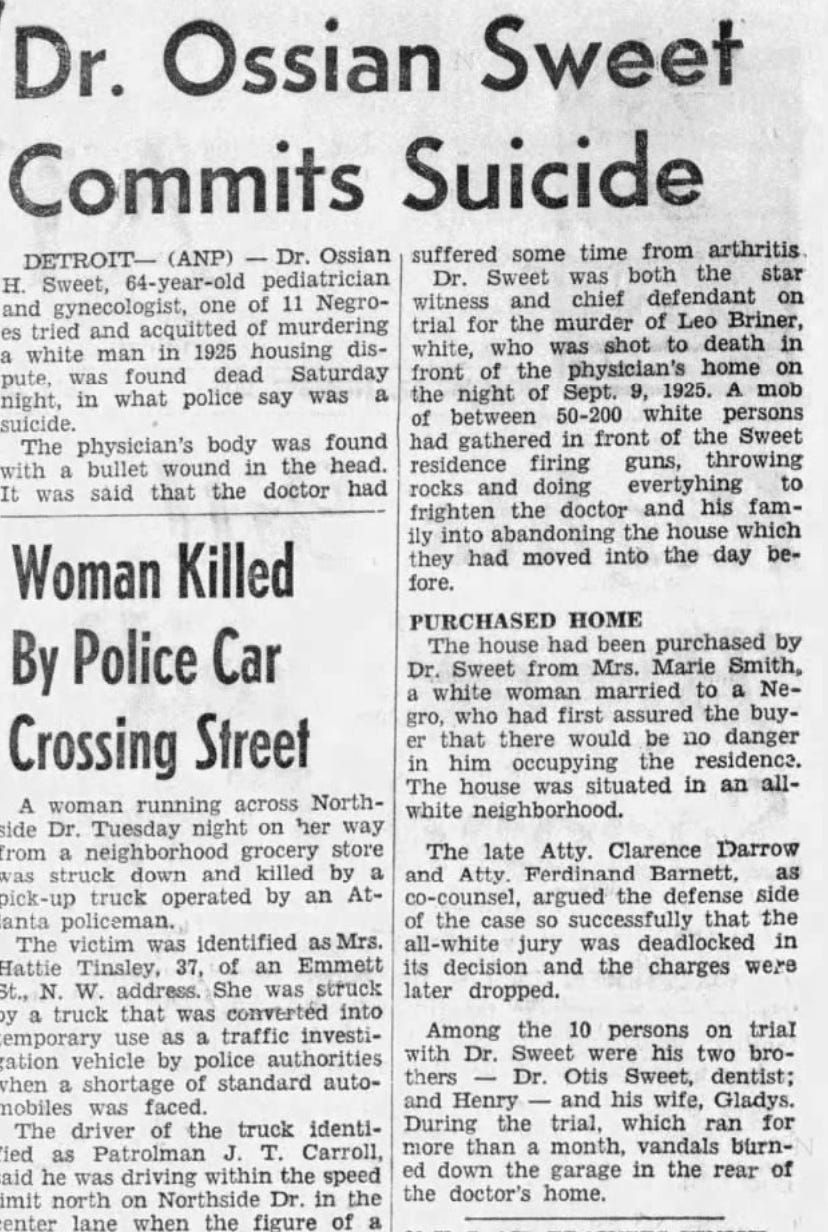
Shots were fired from inside the home. Leon Breiner was killed, and teenager Erick Houghberg was wounded.
Instead of protecting the family whose home was under attack, police arrested all 11 people inside, including Dr. Sweet and Gladys.
They were charged with conspiracy to commit murder and conspiracy to assault with intent to kill.
The Sweet Trials
The NAACP supported the defense, and Clarence Darrow became one of the attorneys representing the Sweets and their supporters.
The case raised a basic question: Did Black families have the same right as white families to protect themselves inside their own homes?
A Michigan decision from 1860, Pond v. People, recognized that a person did not have to retreat when attacked inside their home. The Sweet defense argued that this right also belonged to Black people.
During his testimony, Dr. Sweet described what he called his “peculiar fear.” His fear did not begin on Garland Street. It came from growing up under racial terror, knowing the history of lynching and understanding what white mobs had done to other Black families.
The court allowed the jury to consider his race, experiences and knowledge of mob violence when deciding whether his fear was reasonable.
The first trial ended with a hung jury.
Dr. Sweet’s younger brother, Henry Sweet, was tried separately in 1926 and found not guilty. The remaining charges against the other defendants were formally abandoned in 1927.
The Sweet trials became an important chapter in the struggle for civil rights and Black homeownership. But the trial was not the end of Dr. Sweet’s contribution to Detroit.
Building Black Medical Infrastructure
Dr. Sweet returned to serving Detroit through medicine.
In 1929, he helped establish Good Samaritan Hospital with Bertha McKenzie. Good Samaritan operated as a general and maternity hospital, providing a place where Black patients could receive care and Black medical professionals could practice.
In 1931, Dr. Sweet established St. Aubin General Hospital, further expanding healthcare access for Detroit’s Black community.
This part of his story deserves more attention.
Black women needed places where they could safely give birth. Black families needed physicians who would care for them. Black doctors and nurses needed institutions where they could use their training and serve their own communities
.
Dr. Sweet helped build that infrastructure.
When we remember him only as the man who defended his home, we leave out the patients he treated, the mothers who received care and the Black medical professionals who found opportunities inside the institutions he helped establish.
Standing Inside the Sweet House
My connection to this history changed when my doula sister Tawanda and I were invited to tour the historic Sweet House.
I had already researched Dr. Sweet and understood the importance of the case. But reading about a historic place and standing inside it are two different experiences.
Inside the house, I thought about the people who stood in those rooms. I looked at the windows differently. I imagined what Dr. Sweet, Gladys and everyone with them could see and hear while the crowd gathered outside.
History does not live only in books and court records. Sometimes it lives inside the walls of a house.
During our visit, we met Daniel Baxter, author of Detroit 1925: The Ossian Sweet Story and founder of the Dr. Ossian H. Sweet Foundation.
Mr. Baxter grew up in the Sweet House. As a child, he began to understand that his family’s home carried a story the world needed to know. He made a promise to his mother that people would learn what Dr. Sweet and his family had done.
He has spent years keeping that promise through preservation, education, public tours and his book.
Sitting down with Mr. Baxter meant something to me because I understand what it feels like when a story chooses you.
The Detroit Black Birth Archive exists because too many of our people, places and contributions have been left undocumented. The midwives, physicians, nurses, doulas, childbirth educators, mothers and community builders who shaped Black birth history deserve to be remembered.
Some of their stories are buried in old newspapers and court records. Others are still being carried inside families, waiting for someone to ask the right questions.
If we do not preserve those stories, we risk losing them.
The Beginning of a New Friendship
What began as a private tour became the beginning of a new friendship with Mr. Baxter.
I left the Sweet House with respect for him not only as an author and preservationist, but as someone who kept a promise to his mother and accepted responsibility for protecting an important part of Detroit history.
I am excited to see where this friendship goes.
I can imagine future conversations, educational programs and opportunities for the Detroit Black Birth Archive and the Dr. Ossian H. Sweet Foundation to support each other’s work.
I am not trying to rush it. The best community relationships grow through trust. We sit down, listen, learn what matters to each other and see what grows from there.
That visit inspired Detroit Black Birth Archive Presents: Reading Detroit 1925, a video series exploring Dr. Sweet’s life, medical work and place in Detroit history through Mr. Baxter’s book.
Preserving the Fuller Story
Dr. Ossian Sweet’s legacy belongs to Detroit’s history of Black medicine, Black birth, Black family life, homeownership and resistance.
His Black Bottom patients belong in the story.
The mothers who received care at Good Samaritan Hospital belong in the story.
The Black physicians and nurses who needed places to practice belong in the story.
Gladys Sweet and the family she was trying to protect belong in the story.
Mr. Baxter’s promise to his mother belongs in the story too.
The Detroit Black Birth Archive is preserving these connected histories because our stories deserve to survive in their fullness.
Watch the video, purchase your own copy of Detroit 1925: The Ossian Sweet Story and learn more about the Dr. Ossian H. Sweet Foundation.
We are preserving Detroit’s Black history in our own voices and building something our community will still be able to learn from 100 years from now.
Watch “Reading Detroit 1925”:
https://youtu.be/M2RZfTiJ2f8
Learn more about the Dr. Ossian H. Sweet Foundation:
https://ohsweetfoundation.org
Explore and support the Detroit Black Birth Archive:
https://www.shekitalongdoula.com/black-birth-archive